



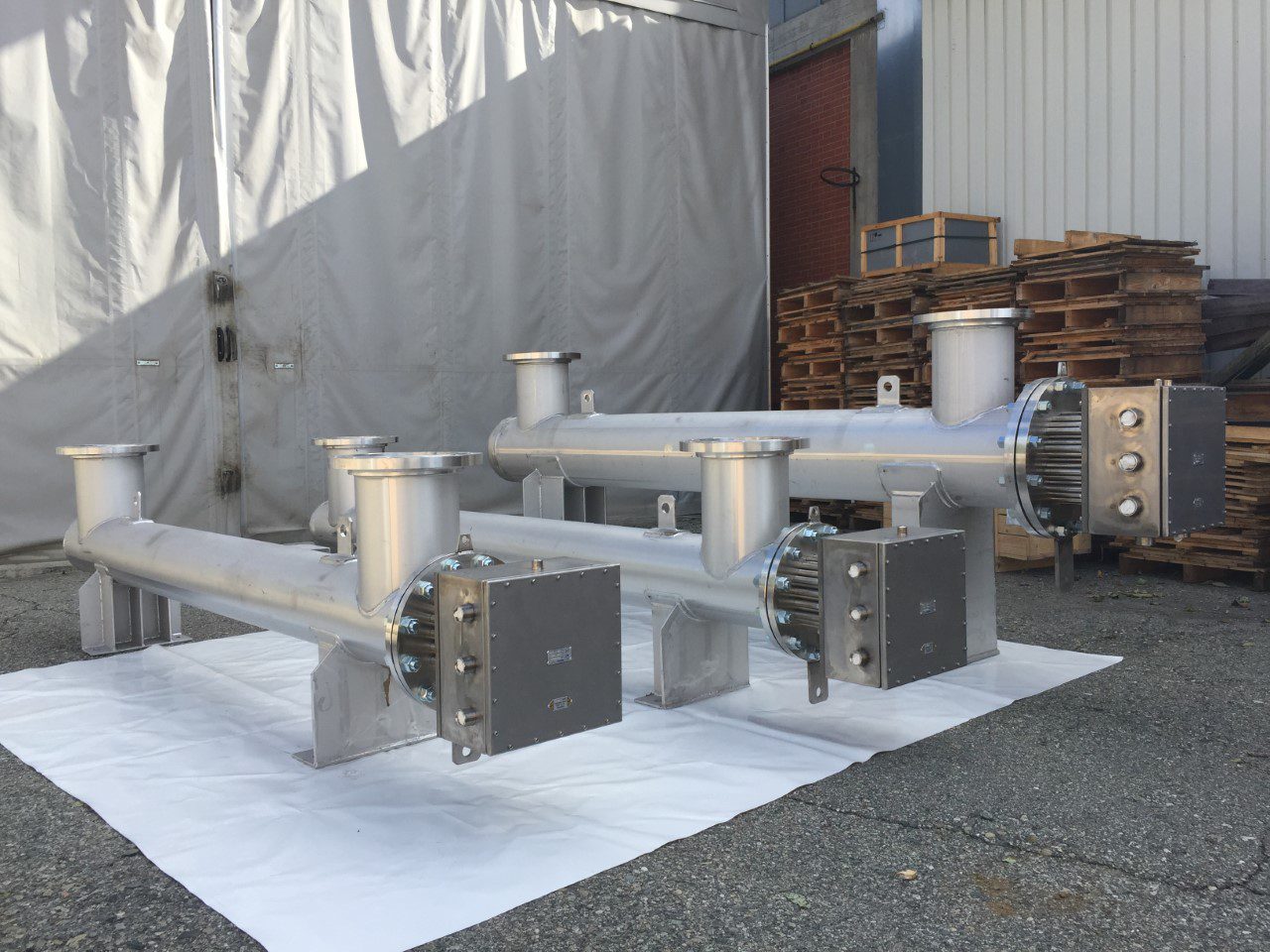
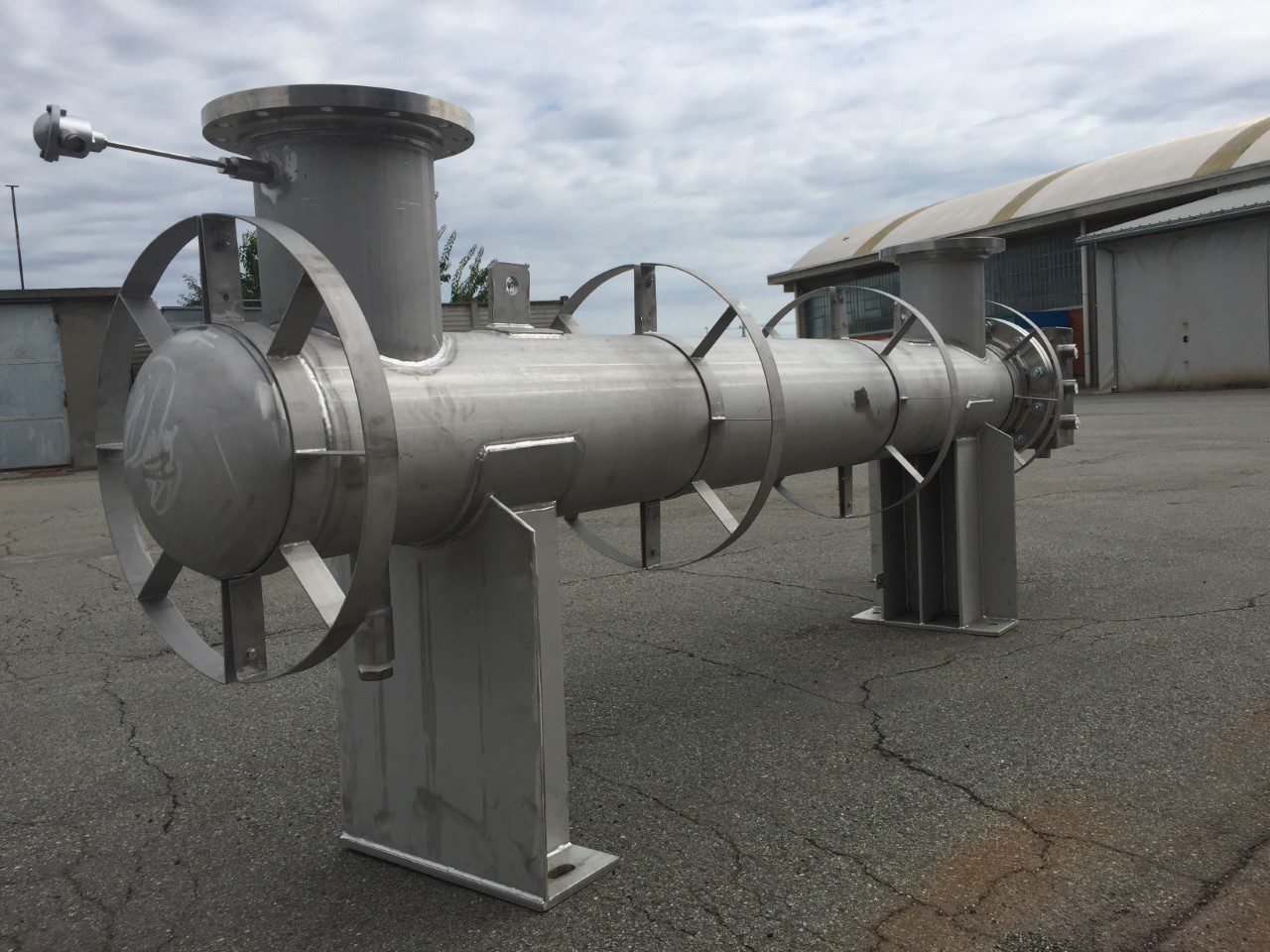
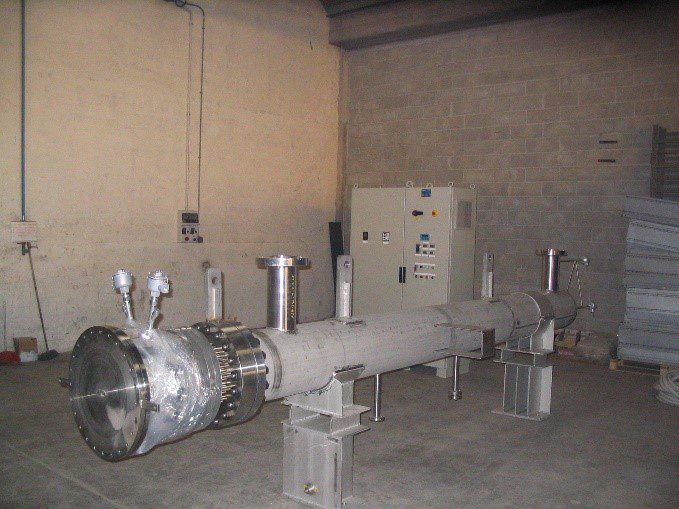
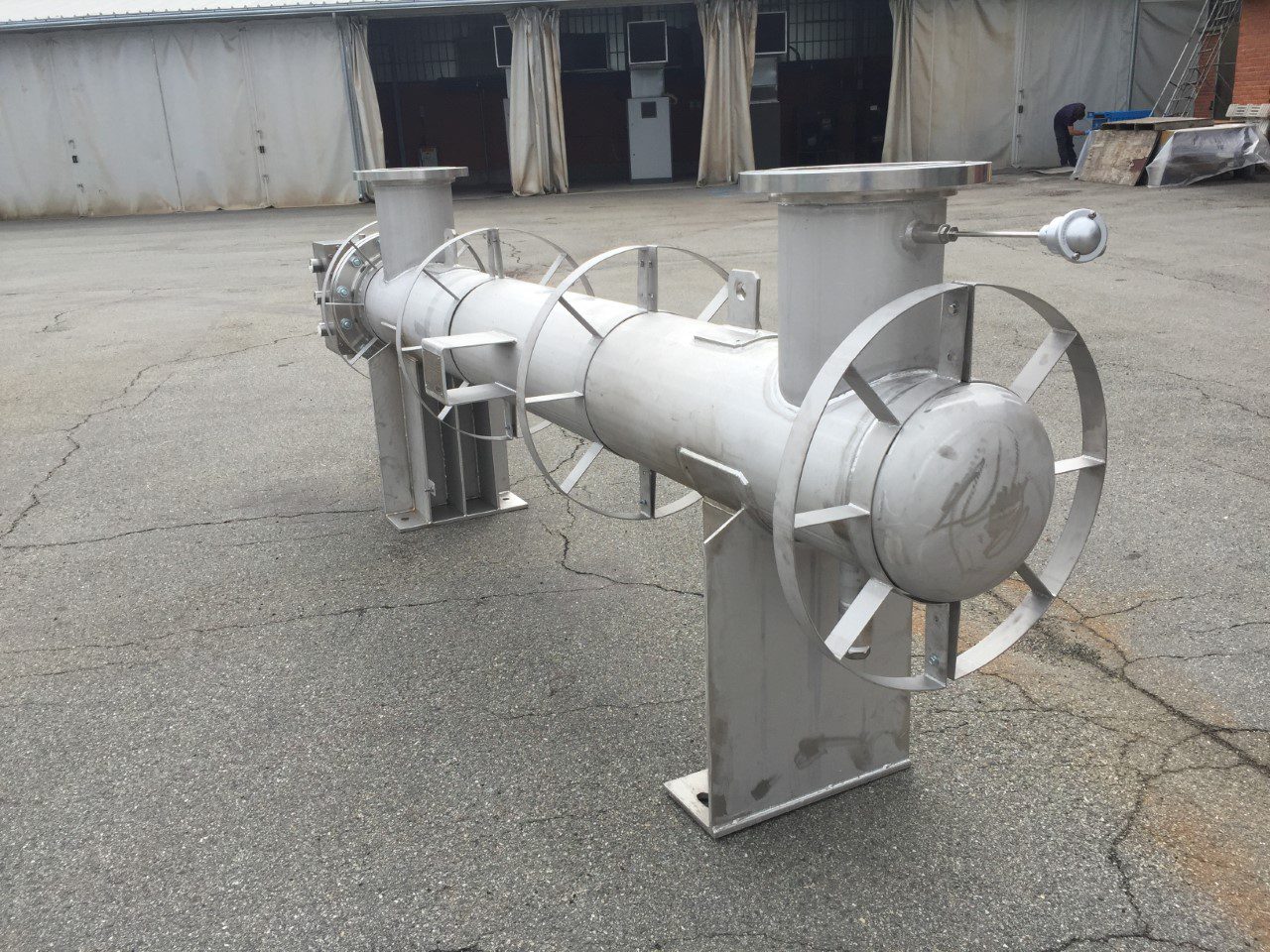
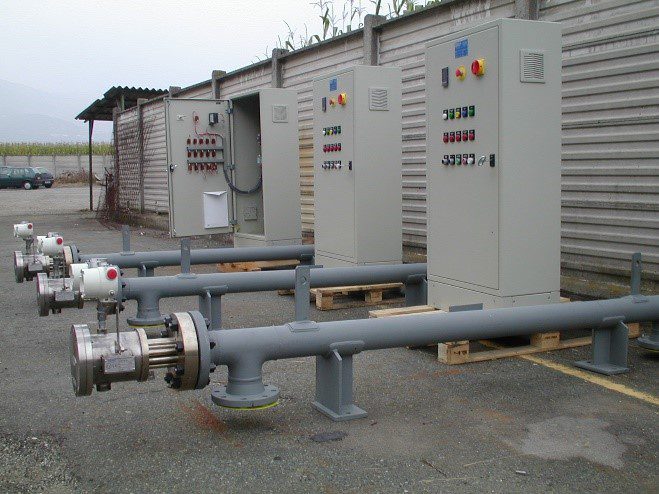
For over 40 years Reart has been producing electric heat exchangers for heating liquids and gases of all kinds. Electric exchangers are the optimal solution for heating process fluids in forced convection with the heating elements in direct contact with the fluid to be heated.
Thanks to their characteristics it is possible to create very compact electric exchangers with control and fine adjustment of the outlet fluid temperature.
Thanks to the experience of the technical department, the exchangers can be designed for the following types of fluids:
The electrical power installed on the electric exchangers can vary up to thousands of kW according to specific customer requests.
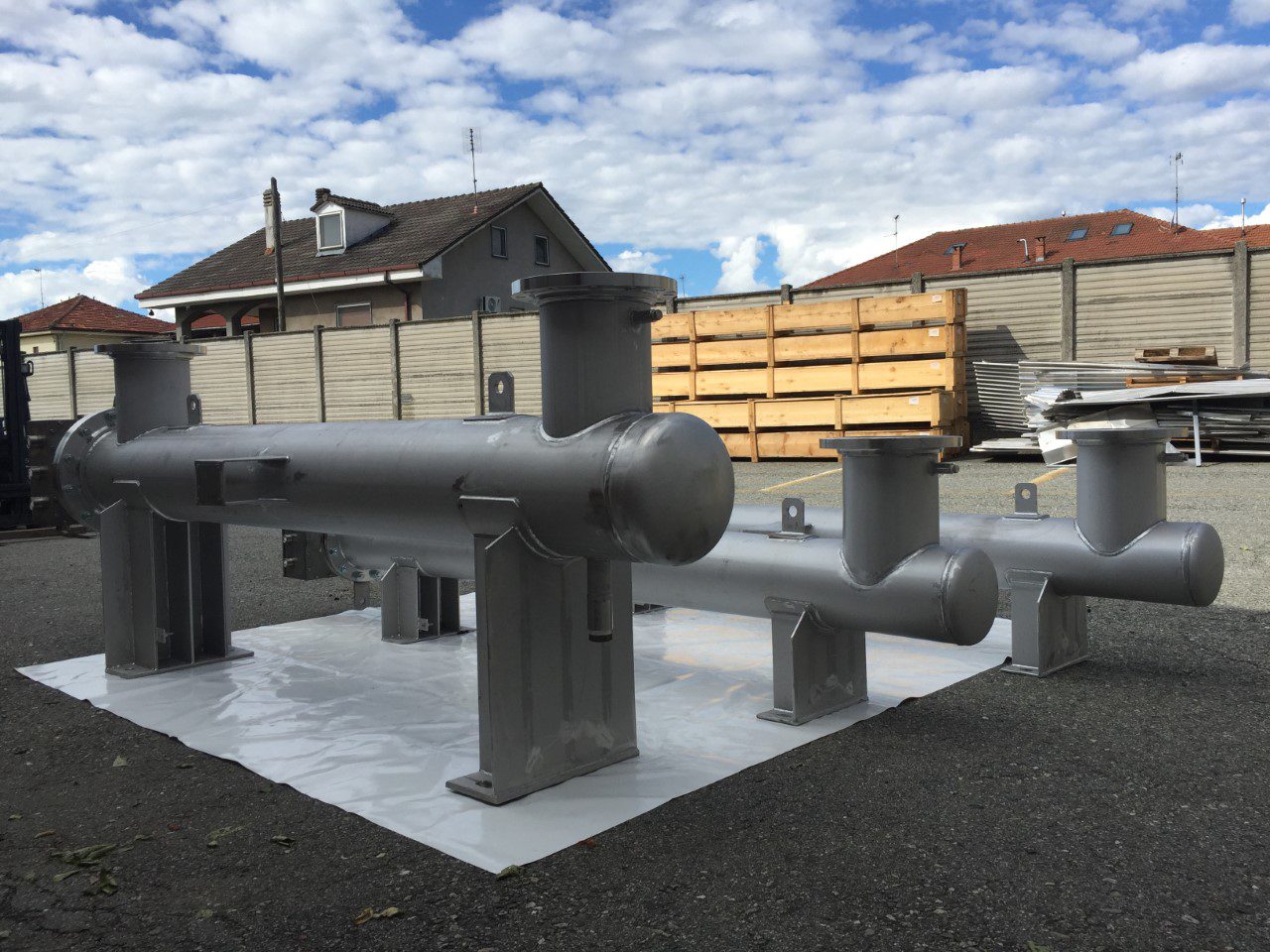
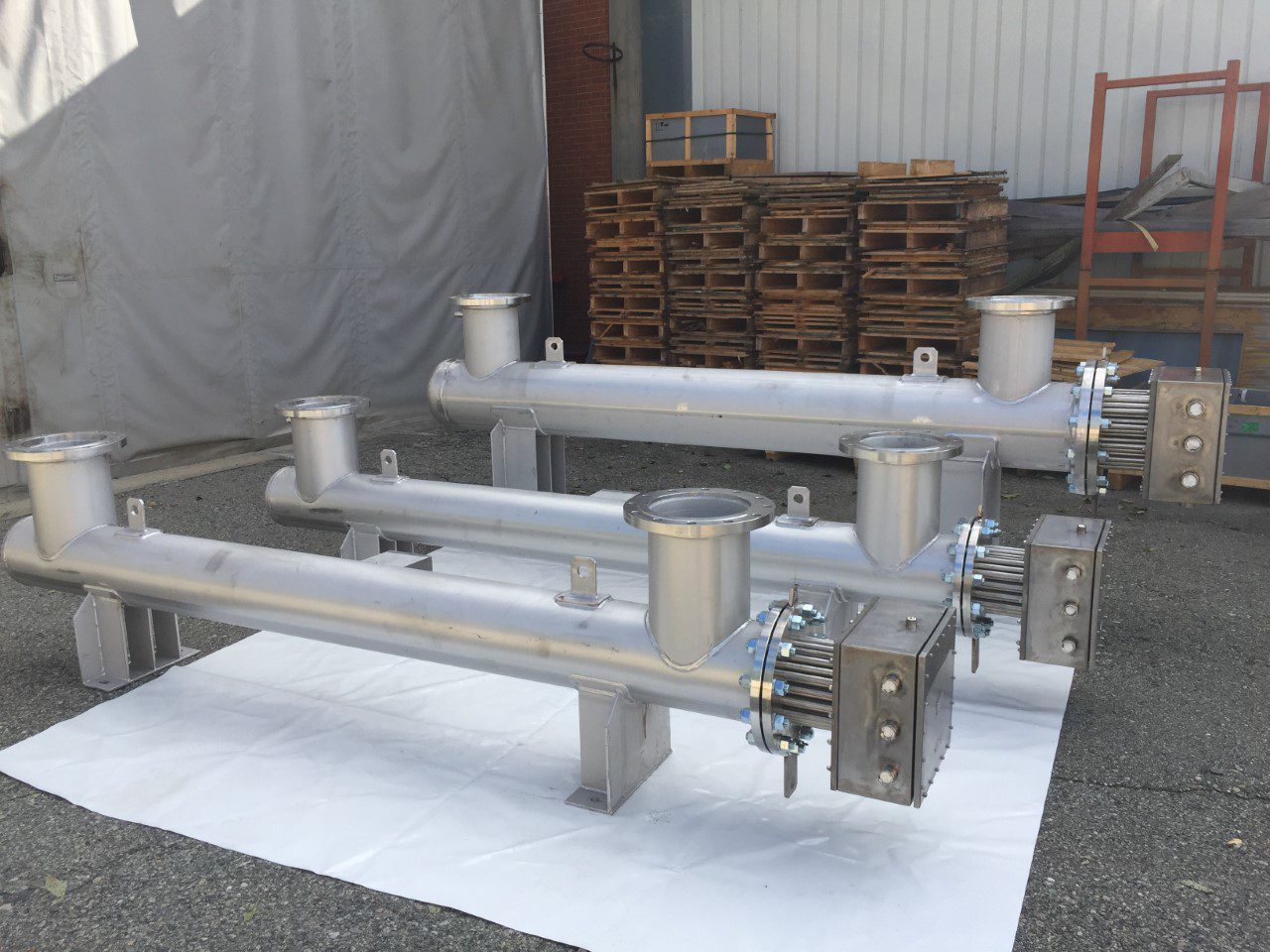
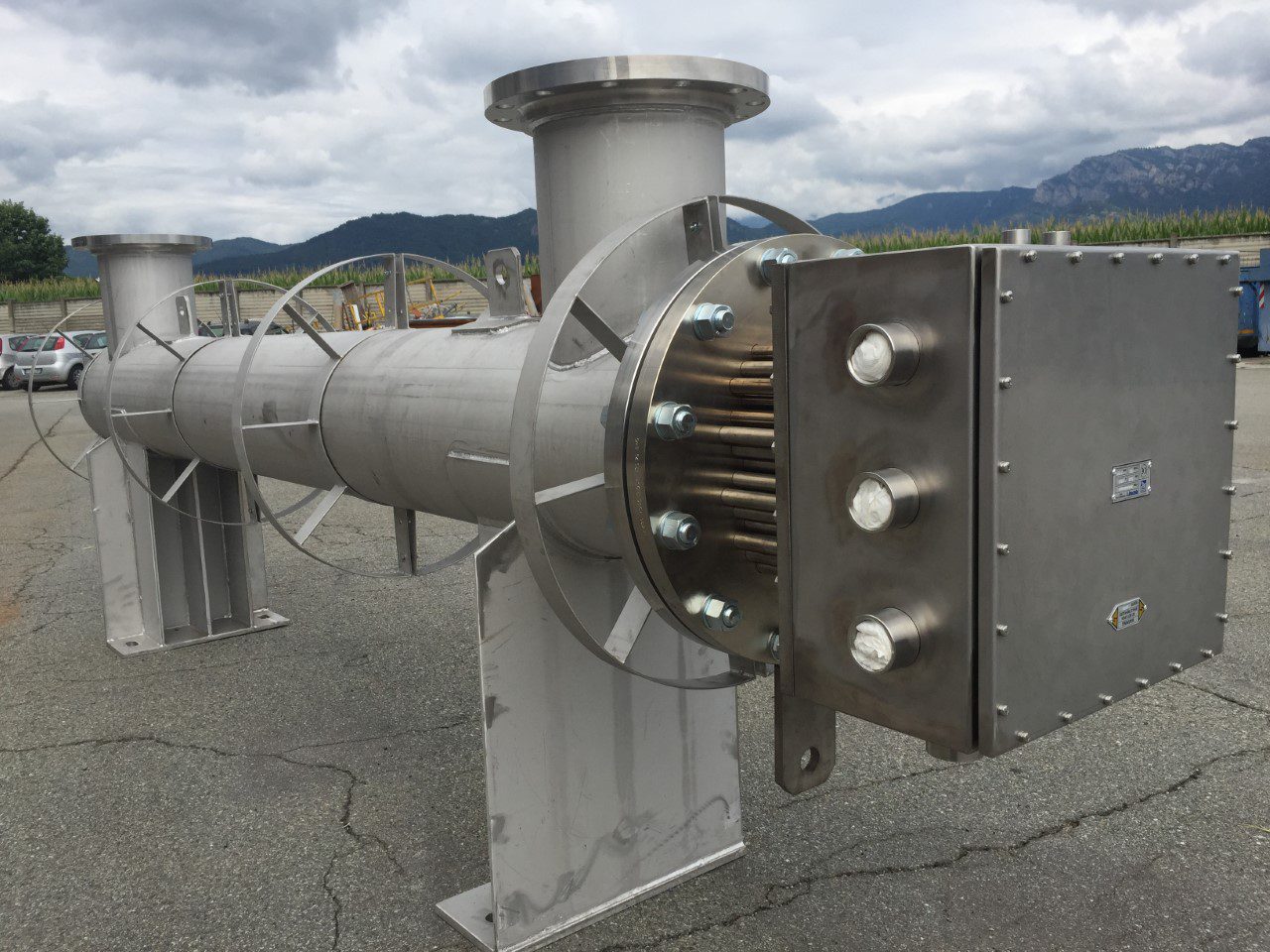
The electric exchanger consists of an electric heating bundle with several resistive elements connected to each other and welded on a flange for coupling to the tank and inserted inside a tube (exchanger shell) sized and designed according to the project data (temperature and pressure ) and in compliance with regulations according to the country of destination: VSR, PED, ASME, U-STAMP, TEMA, ADMERKBLATTER, STOOMWEZEN.
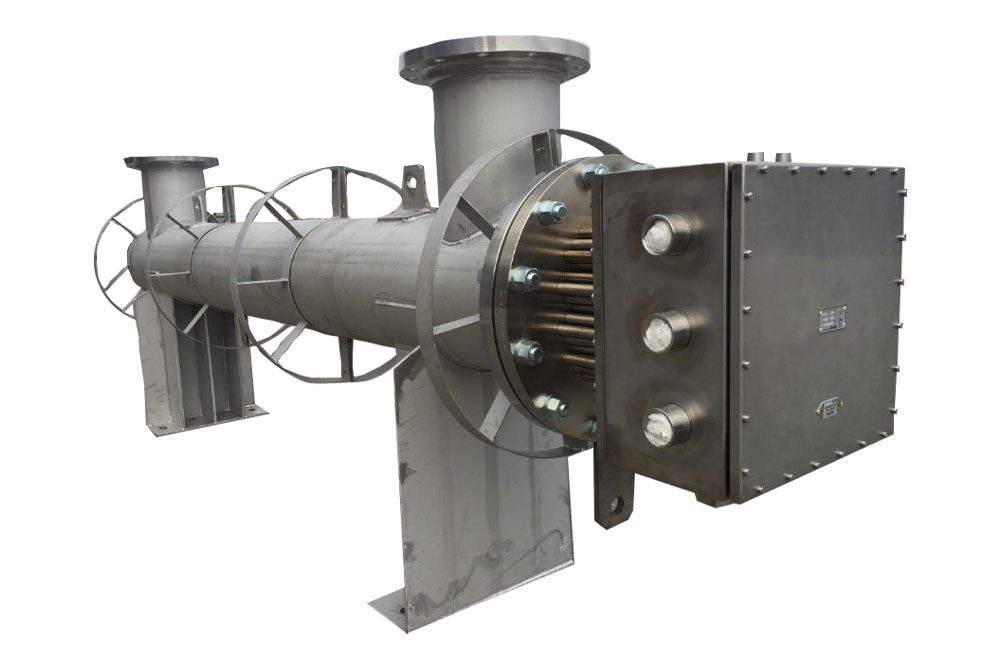
The tank and the heater are sized (Materials and dimensions) by the technical office based on the operating conditions indicated in the customer’s reference specifications and on the design conditions using thermodynamic and mechanical calculation software.
Different materials are applied to the part under pressure (tank and coupling flanges) and to the heater depending on the operating conditions:
For the heating elements (electric heating beam) the following can be used:
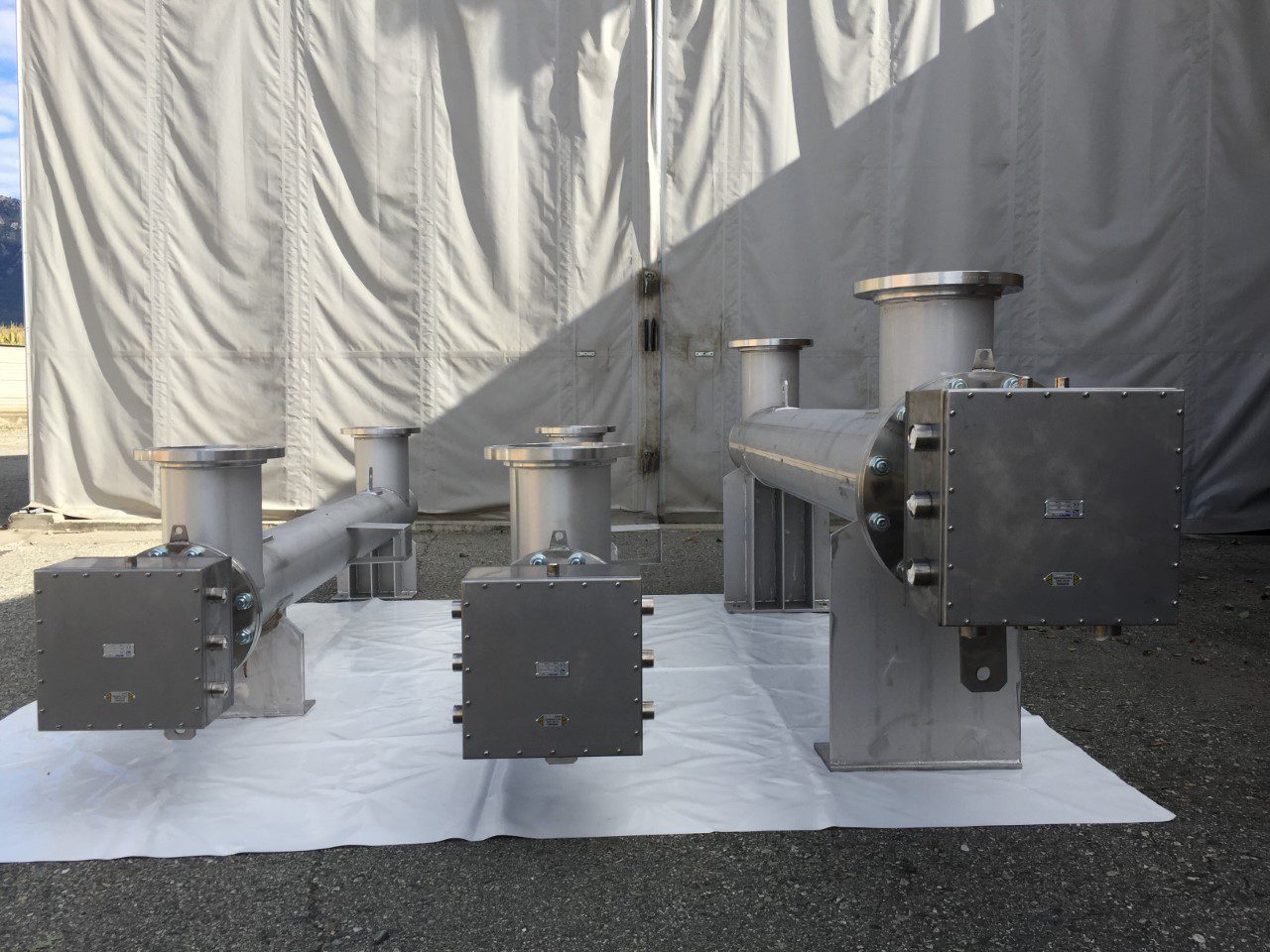
Depending on the maximum operating temperature of the system, the electrical enclosure of the heater connections can be in direct contact with the heater flange or in the “cold head” execution. The protection rating can be IP55, IP65 or IP66 with relative sealing gasket. The manufacture materials can be in carbon steel painted with aluminum zinc paint or otherwise in Aisi 304 stainless steel.
The electric exchangers are sized by the technical office, with the help of a software for thermodynamic sizing thanks to which it is possible to obtain the real operating conditions based on the needs and specifications of the customer to create flows at a controlled temperature.
Thanks to the use of this software for the sizing of the electric exchangers, it is possible to define the main parameters including:
The exchanger can be supplied together with the relative insulation supports, the exchanger lifting eyebolts, the tank support saddles for mechanical fixing of the exchanger, the process control instrumentation (sensors thermals), and any connections to the tank (venting and drain).
Reart manufactures process skids and supplies the turnkey package by supplying, in addition to the electric exchanger, the relative electrical command and control panel of the exchanger.
The experience Reart, in many years of presence on the market in various sectors, allows to give its customers the most suitable technical solutions for the type of application required.
Reart is able to provide the following services to support the products supplied:
The following documentation is provided with the electric exchangers in the final certification file accompanying the product:
Customized solutions are also provided on request and customer specifications.

VIA PINEROLO, 20/2
10060 FROSSASCO (TO) ITALY
PHONE +39 0121.35.29.77
FAX +39 0121.35.29.68
Ufficio Vendite sales@recogroup.it
Ufficio Acquisti acquisti@recogroup.it
Amministrazione amministrazione@recogroup.it
P.IVA 03948060011

VIA PINEROLO, 20/2
10060 FROSSASCO (TO) ITALY
PHONE +39 0121.35.29.77
FAX +39 0121.35.29.68
Ufficio Vendite sales@recogroup.it
Ufficio Acquisti acquisti@recogroup.it
Amministrazione amministrazione@recogroup.it
P.IVA 04727180012
Copyright © 2023 Reco Group – registration in the commercial register Torino n. 03948060011 – Privacy Policy | Cookie Policy | Review consent cookie